Shankaprakshalana: Mouth-to-Anus Cleansing
a very deep Internal Cleansing – Heritage of Ancient Ayurveda
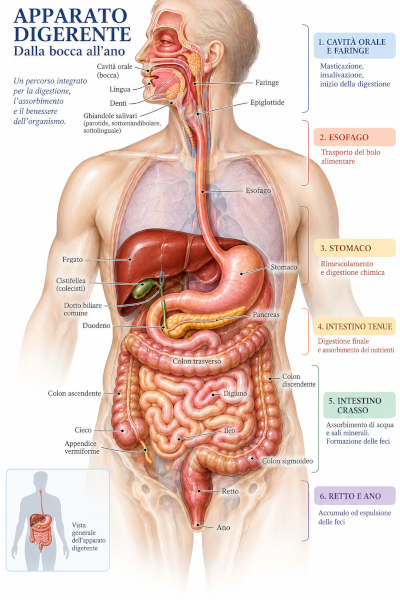
Shankprakshalana is an ancient Indian practice for cleansing the digestive system, from the mouth all the way to the anus.
It has been known for a very long Time in the Indian Tradition and is practised in different forms.
On this page I speak mainly about Laghu Shankprakshalana, that is, the shorter form, and about my personal experience with this technique.
I began practising it many years ago under the guidance of a Yoga teacher and, over Time, I experimented with different methods.
Shankprakshalana should not, however, be regarded as a trivial practice simply because it uses simple elements.
It acts deeply on the digestive system and, precisely for this reason, today I believe it is appropriate for those who wish to experience it to do so after obtaining adequate information and, when necessary, with the guidance of a competent Person.
When Purification Practices Make Sense
The practice of purification becomes meaningful above all when it is accompanied by a genuine Will to keep one’s Body in good condition.
I like to think of the Body as a Temple, the place in which our Soul dwells.
Purifying ourselves only to immediately reintroduce the same habits that brought us to imbalance simply means continually repeating the same pattern.
Real transformation therefore does not arise only from a cleansing technique.
It arises from a gradual change in our relationship with the Body, with Food and with our own Life.

The Diet Acquired from Birth
It is important to understand that it is not necessary and often not useful to change one’s diet drastically from one day to the next.
Eating habits built up over the years exert considerable force on the Body and mind.
For this reason I prefer gradual change.
One can begin introducing simpler and more natural foods, observing the Body’s reactions over Time and learning to listen to its signals.
Fruit, vegetables and minimally processed foods can gradually occupy a greater space, without turning dietary change into a new form of violence towards oneself.
Over Time, the Body itself may begin to ask for something different.
And it is precisely at that moment that a new Path can begin.
How Shankprakshalana Is Traditionally Practised
The traditional procedure of Shankprakshalana uses salted water and a sequence of Yoga movements and postures, generically called Asana, which accompany the passage of water through the digestive system.
I myself began by practising it in this way under the guidance of a teacher.
Over the years I then experimented with some personal variations.
This page, however, is no longer intended to be an operational manual for carrying out intestinal cleansing independently.
The quantity of water and salt, individual conditions, the possible use of enemas, fasting, hydration and the food consumed afterwards are aspects that can have important effects on the balance of the Body.
For this reason, today I prefer to leave here a description of the practice and of my experience, without turning it into a prescription valid for everyone.
My Experience with Shankprakshalana
I practised this technique for many years, beginning in 2007.
During this long period I personally observed the reactions of my Body and also experimented with methods different from the traditional procedure.
Some indications that circulated, and still circulate, on the web did not coincide with what I had experienced directly.
For example, in the past I also practised Shankprakshalana during periods of fasting and, on the basis of my experience, I modified some of the traditional dietary indications following the practice.
These remain personal experiences, however, not universal rules.
Over Time I increasingly understood that an ancient practice should not simply be copied in its external form.
Its meaning and the context in which it arose must be understood and, above all, it must be adapted with Discernment to the Person and to the Time in which we live.
The Practical and Spiritual Heritage of India
India possesses a spiritual, cultural and practical heritage of enormous value.
It is a heritage that can be used in everyday Life and that very often unites Body, mind and inner Path.
I lived in India for a long time and was also able to observe directly the profound transformations the Country was undergoing.
Modernisation, changes in eating habits, the spread of industrial products and the increasingly strong arrival of Western models were rapidly changing the everyday Life of Indians as well.
This led me to reflect deeply on the difference between the Wisdom of Ancient India and contemporary India.
They are not the same thing.
Practising Discernment Is Very Important
Ayurveda, the ancient Indian medicine, possesses a vast heritage of knowledge.
But even an ancient Tradition must be understood, interpreted and applied with Discernment.
Mechanically following a rule merely because it is ancient does not necessarily mean understanding its meaning.
This principle applies to Ayurveda, to Yoga and also to Jyotisha.
Knowledge remains alive when we are capable of understanding its essence and observing Reality.
During the years I spent in India I witnessed enormous changes in eating habits and lifestyle.
Television, consumption, the industrialisation of Food and the Western economic model were penetrating with extreme rapidity.
For this reason I have always considered it important to distinguish the great heritage of Ancient India from the habits of modern India.
Meaning of the Word Shankprakshalana
The term Shankprakshalana derives from two words.
Shankha means “conch”, while Prakshalana indicates complete cleansing.
The term Shankha is used symbolically to describe the long channel running from the mouth to the anus.
The mouth represents what we introduce into ourselves.
The intestine represents the process of transformation and digestion.
The anus represents the exit of what the Body has separated and no longer uses.
The practice is also known by the name Varisara Dhauti and belongs to the broader heritage of Indian purification techniques.
The concept of Kaya Kalpa instead evokes the idea of transformation of the Body:
Kaya means Body and Kalpa transformation.
Shankprakshalana therefore represents, within the Tradition, a powerful cleansing action on the digestive system and belongs to a broader set of practices devoted to the transformation of the Person.
Ayurveda and Vedic Astrology
This ancient purifying technique originally belongs to the sphere of Yoga and Ayurveda.
I chose to include it among the Astrological Remedies because Ayurveda and Vedic Astrology, or Jyotisha, belong to an ancient system of knowledge in which Body, mind, Karma and the quality of Life are observed as interconnected elements.
Jyotisha provides a Map of Life, indicating the areas in which imbalances may exist and showing where it may be useful to intervene.
Shankprakshalana represented, along my Path, one of the possible physical tools within this broader work of rebalancing.
Concluding Thoughts on India and Intestinal Cleansing
It may seem that on this page I have moved away from the main subject, but I also wanted to offer a small fragment of the Life I observed during the years I spent in India.
A Country in which an ancient heritage of enormous value coexisted with extremely rapid modernisation.
Many Western books still describe an India almost motionless in Time.
The real India I knew was instead changing rapidly.
The fundamental point, for me, remains this:
an ancient Wisdom must be understood in its Essence, not simply imitated in its external forms.
It is for this reason that, over the years, I also allowed myself to modify some aspects of Shankprakshalana on the basis of my personal experience.
Today, however, I prefer this page to remain above all as a testimony to that work and that research.
Shankprakshalana is not merely a physical act.
In the way I experienced it, it also represented the symbol of something broader:
eliminating what is no longer needed in order to create space for something new.
Sama