An Ancient Wisdom of the Sages of 5,000 Years Ago
Jyotisha or Vedic Astrology
Apart from certain similarities in the meaning of the Signs, the Planets and, to some extent, the Houses, there is a very profound difference between Western Astrology and Vedic Astrology.
Each form of Astrology performs its own function.
Western Astrology generally uses the Sun Sign as its main reference, followed by the Ascendant.
Vedic Astrology, on the other hand, uses the Ascendant together with the Planet Moon as fundamental points of reference.
When in the West we hear, for example, that those born under Leo, or any other Sign, will feel a certain impulse to do a particular thing, it is difficult to accept the idea that an enormous number of People born over a period of as much as thirty days could have exactly the same impulse and produce similar effects.
It is very well suited to drawing-room chatter.
I am referring to the use made of Astrology in newspapers, magazines and the mass media in general, not to Western Astrology itself.
Anyone approaching Jyotisha should therefore understand that what they normally know about Astrology through radio, newspapers or entertainment columns has very little to do with this ancient Science of Light.
Even those who know Western Astrology well will find relatively few things in common with Jyotisha.
How, then, could this very ancient Indian spiritual Instrument be described without turning the explanation into a lengthy treatise?
How can Jyotisha be summarised?
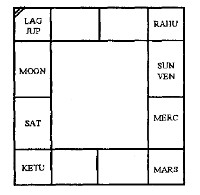
We could say that Vedic Astrology, or Jyotisha, is the reading of a Person’s archetypal world through its own symbolism, that is, through the Archetypes that characterise that Person within the context of this Universe.
In simpler words, we could say that part of the Person’s inner symbolism is laid bare, while also revealing some of the keys needed to understand it through their Birth Chart or Horoscope.
Sometimes we do not know why we react in a particular way when faced with a situation.
At other times we do know, but we would like to manage that reaction differently, and this is not always easy.
The Planets represent some of the principal Symbols of the archetypal and astrological context, and each of them in turn contains other meanings that operate in the different areas of our Life.
Vedic Astrology possesses many tools for understanding what is out of balance and, in very many cases, for suggesting how to intervene.
An Example: Mars
Having a strong Mars in one’s Birth Chart means possessing a great Energy directed towards action, adventure and often also leadership.
The direction that this Energy will take, however, depends on the entire context, that is, on the balance formed by the other planetary Forces.
A well-placed Mars can provide a strong drive towards an important and useful social role.
A poorly placed Mars can instead direct that same Energy towards destructive, aggressive or dishonest behaviour.
A Mars lacking Strength can make it difficult to act, take initiative or transform Will into Action.
These are useful examples for understanding the principle, but Reality always requires us to observe the entire Astrological Configuration.
An Example: the Moon
The Planet Moon also shows very clearly how the same function can express itself in completely different ways in Jyotisha.
A strong and well-placed Moon can contribute to great sensitivity, a melodious voice, Poetry and the ability to perceive deeply, and these are all aspects that can emerge in a Birth Chart according to Ancient Vedic Astrology.
A Moon in a difficult condition can make emotions more complex to manage, favouring melancholy, becoming easily moved, sadness or strong emotional instability.
A Moon lacking Strength can instead describe a Person who is almost “emotionally anaesthetised”, with emotions that are present but difficult to access, as though they were blocked in an inner place whose keys need to be found.
Here too, these are only examples.
Peace of mind is, in any case, closely connected with the Moon, which also represents the mother.
The Complex Framework of Symbols within Karma and Dharma
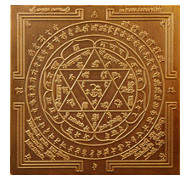
Our inner world possesses a dense weave of Symbols that act with great force in Life.
The Planets clearly express these Symbols and, at times, they may also emerge through dreams.
The Sun and the Moon are called the Luminaries.
The Sun takes on different meanings according to the plane on which it is observed.
In the spiritual sphere it represents the Soul, while on the practical plane it also represents the father.
It is therefore easy to understand how a difficult or harmonious condition of the Sun in the Birth Chart can produce different expressions in the Person’s Life.
The Yoga
The Planets also form numerous combinations called Yoga, meaning “unions”.
There are very many of them.
Some configurations can describe People of great ability and power.
In earlier Times these combinations could manifest through kings, rulers or emperors.
Today they may express themselves through People who wield great power in politics, finance, the humanities, religion, sport or many other areas.
The world changes in appearance, but many of the deeper dynamics operating within society remain recognisable through Time.
These dynamics will continue until a new quality of Consciousness comes into play, a new Human Being capable of using their power in a balanced way and manifesting on Earth a higher dimension of Universal Consciousness.
What Can Vedic Astrology Show?
In essence, Vedic Astrology can help you understand:
- where you come from;
- where you are now;
- where you are going;
- which Energies are operating;
- which patterns form part of your Karma;
- which Actions may be most useful for your Path and your Dharma.
It can help make more visible that Manual of Life that we would all like to possess.
Not in order to replace the Person, but to reveal more clearly the terrain through which they are moving.
Jyotisha possesses very specific tools, such as the Divisional Diagrams, the Dasha, the Nakshatra, the Yoga and many other systems of analysis that make it profoundly different from the forms of Astrology commonly known in the West.
How to Study Jyotisha
As with every Ancient Knowledge founded upon Truth, in order to learn it, it is very important to receive the Teaching from someone who, in turn, has received it within a Tradition or through a Master.
This is particularly important for a modern Westerner.
Jyotisha arose within a cultural, spiritual and mental framework very distant from that of the contemporary West.
The modern West tends to be strongly intellectualised, rational and scientific, and much less religious or symbolic than the cultures within which this Knowledge was born.
For this reason, it is extremely useful to receive the Teaching from someone who knows how to adapt it to the Person receiving it, while keeping its structure and meaning intact.
Jyotisha is not merely a technique to be learned.
It is a different way of observing Life, Time, Karma and Consciousness.
Sama